How We Found It: Our friend Herr Lieben, a Georgian-born North Carolinian, clued us into this one.
Date and Distance Hiked: 1/15/12 and 2/11/12, 6-ish miles both times
Find the Trailhead: We’ve hiked from the top of Morrow Mountain and from the first entrance of the park off Morrow Mountain Road (coming from 740 out of Albemarle). There are apparently other northern trailheads, but we haven’t ventured that way yet.
Map: Find a really vague map online.
Bathroom Situation: Visitor center at the top of the mountain. Kind of icky.
Fees (Where/How Much): Free
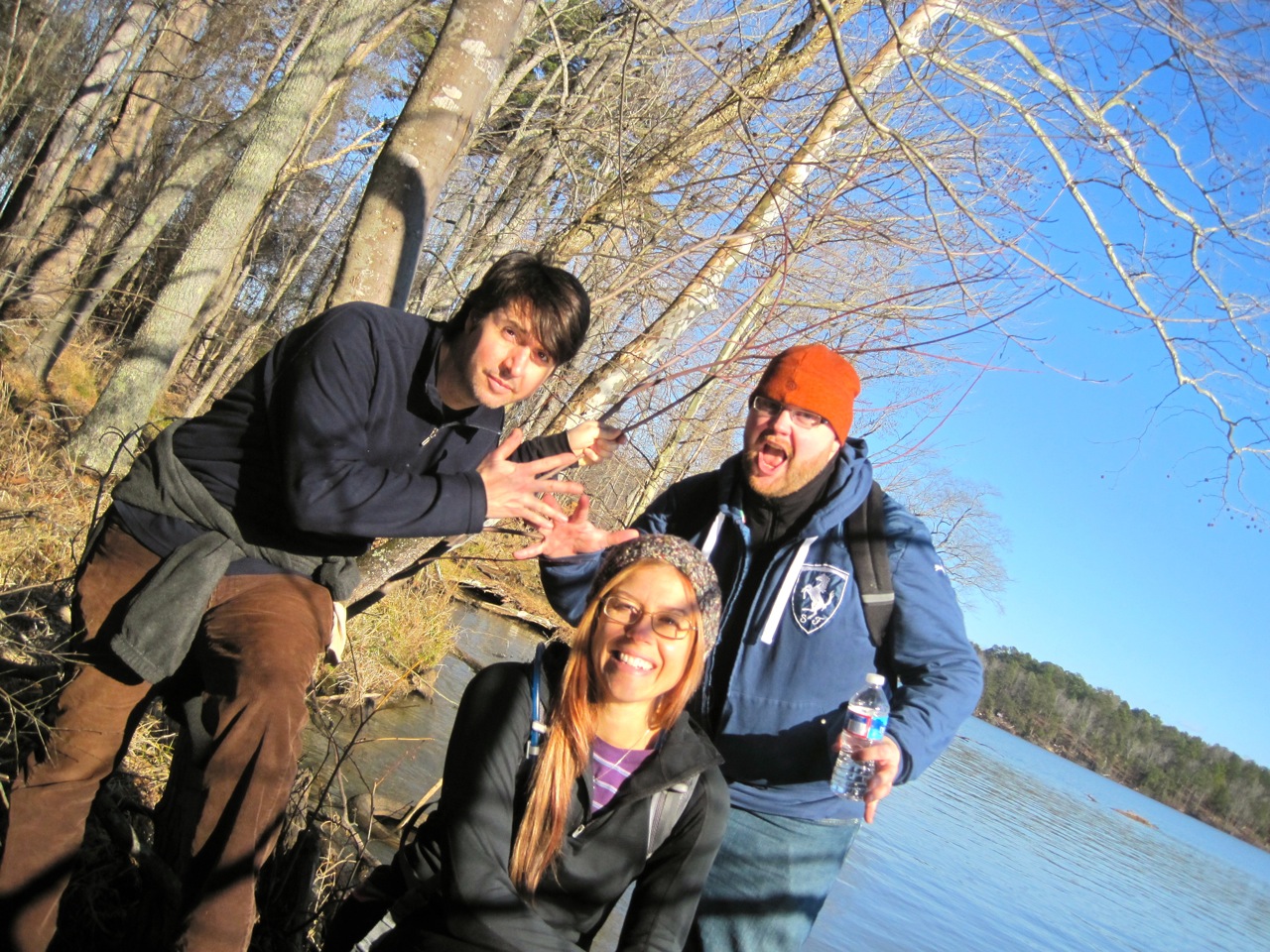
Our Route: In January, we parked at the top of the volcano and swirled down around the mountain like icing on a cinnamon bun (the trail was hard to discern), then jitterbugged from the Mountain Loop Trail to the Short Loop to part of the Middle Loop to Lake Tillery on the trail to Duck Blind Cove.
In February, we parked at the information center at the entrance and went south on the Long Loop, to complete the Short Loop, and back to the information center again Long Loop.
Of Interest: The highest peak in these mountains is Morrow Mountain at 900′.
What Nobody Told Us before We Went: The trails are marked impeccably, with extra signage and actual maps at trail intersections. The exception we’ve found so far is the area around horse trailer parking near the entrance of the park. The trailhead you’re probably looking for will be at the left-front side of the horse-trailer parking lot.
Most trails double as hiking and bridle trails, so beware of mudpits and road apples all over the place.
Of Interest:
• Ancient history: The foundation for the features in Morrow Mountain State Park was laid hundreds of millions ago by volcanic events. Many civilizations have spent time here and left their mark.
• Crunchy rocks: A mere 10,000 years ago, American Indians quarried this site for the durable, useful Morrow Mountain rhyolite, formed by layers of volcanic ash squashed together. It “knaps” well, meaning that it can be chipped into arrowheads and other tools. As you walk around much of this park, you’re stepping on crunchy rock chips that are the product of quarrying.
• Tons of history in this area. Here’s a cool article on Badin if you have time to explore after your hike.
 Blue Ridge Dayhiking
You must be logged in to post a comment.